Advertisement

AI Bias Analysis

4 models · Takes ~15 seconds

New Scientist

How many academics does it take to tell a joke? Time for a study...
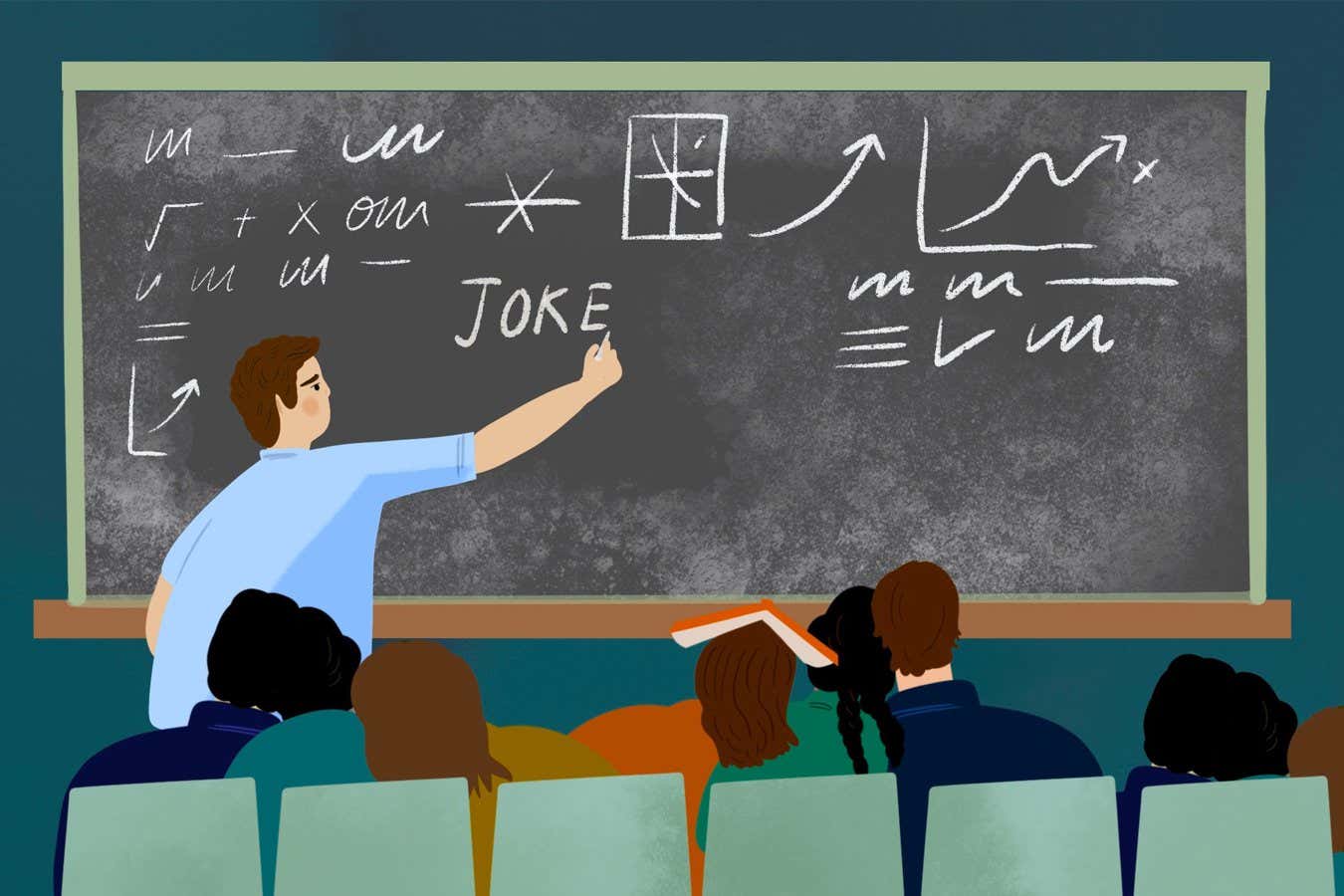
How many academics does it take to tell a joke? Time for a study...
ShareXFacebook

Feedback is delighted to discover a study analysing the use of humour at scientific conferences – but disappointed to find a distinct lack of it

N

Source

New Scientist

Read full article at New Scientist

Opens original article in a new tab

Advertisement

Related Science Stories

Want to be a citizen scientist? Here are five ways to get involved
Phys.org

Want to be a citizen scientist? Here are five ways to get involved

Ever wondered what it might feel like to spot giant spider crabs while you're snorkeling? Or check plants for the circular holes that indicate native bees are collecting nest materials? Citizen science relies on people like you—more than a million of them in Australia, actually—to collect and analyze valuable data about the world around us.

Read more →
One-atom substitution successfully tunes molecular heat transport for the first time
Phys.org

One-atom substitution successfully tunes molecular heat transport for the first time

Control of heat transport in nanostructures is of central importance for numerous modern technologies—from high-performance computer chips that need to be cooled to energy converters—and is a highly active area of research. While great progress has been made in recent years in understanding how heat transport can be influenced by nanostructuring, it was previously unclear whether the replacement of a single atom in a molecule could measurably alter phonon transport—i.e. heat transport through la

Read more →
A global carbon credit program risks rewarding the wrong behavior
Phys.org

A global carbon credit program risks rewarding the wrong behavior

A United Nations-backed framework for protecting tropical forests could allow governments to collect income from carbon credits without advancing forest conservation. The weakness lies in how the program calculates baselines, which is the expected rate of deforestation without intervention. There is no evidence that enrolled jurisdictions—countries, states, and provinces—have acted on that opportunity, but the incentive structure favors those who do, according to a study by Yale researchers appe

Read more →
Advertisement