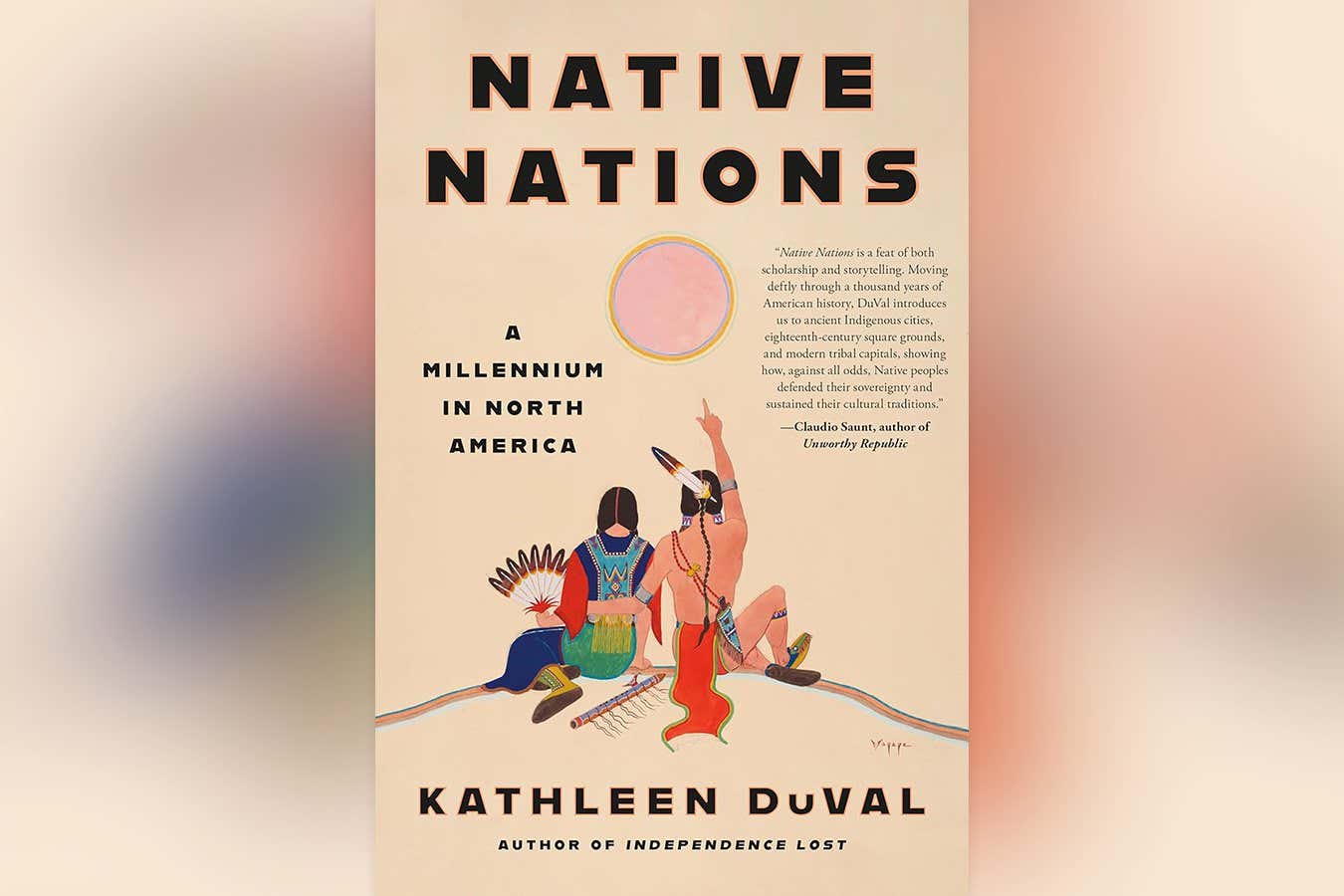
New Scientist recommends the engaging Native Nations by Kathleen DuVal
The books, TV, games and more that New Scientist staff have enjoyed this week
Source
New Scientist
Opens original article in a new tab
AI Bias Analysis
4 models · Takes ~15 seconds

The books, TV, games and more that New Scientist staff have enjoyed this week
Source
New Scientist
Opens original article in a new tab

Cells are not isolated units; they continuously exchange proteins, genetic material, and even entire organelles with their neighbors. Intercellular transfer influences how tissues develop, respond to stress, and repair damage. In certain cancers, for example, tumor cells can acquire mitochondria from nearby cells to sustain growth; similar exchanges are also linked to aging processes. However, despite massive advances in gene-editing and molecular-targeting technologies, we still lack the tools

Plastic, once ingenious for its durability and versatility, has become a global environmental issue that is affecting every aspect of life. This, in turn, is fueling the development of degradable polymers as alternative solutions. Among contending the possibilities are poly(disulfide)s, which have garnered attention as redox-degradable polymers with various polymerization techniques that can break down in reductive environments, such as the seafloor. However, according to the specific objective,

Solar-power photocatalysis—turning sunlight into energy—holds promise for sustainable and cost-efficient energy and chemical production. Advancing the technology, though, has been hindered by a lack of understanding of exactly how the process works. To that end, a team of Yale researchers has developed a technique that allows them to observe the sunlight-to-fuel conversion in real time, right down to the nanoscale. Specifically, they can see how the light-driven catalyst splits water into hydrog

NASA astronaut and Artemis II Commander Reid Wiseman took this picture of Earth from the Orion spacecraft’s window after completing the translunar injection burn. There are two auroras (top right and bottom left) and zodiacal light (bottom right) is visible as the Earth eclipses the Sun. This and another photo of Earth are the first […]