
AI Bias Analysis

4 models · Takes ~15 seconds

New Scientist

Capitalism has warped our understanding of ecology and life’s origins
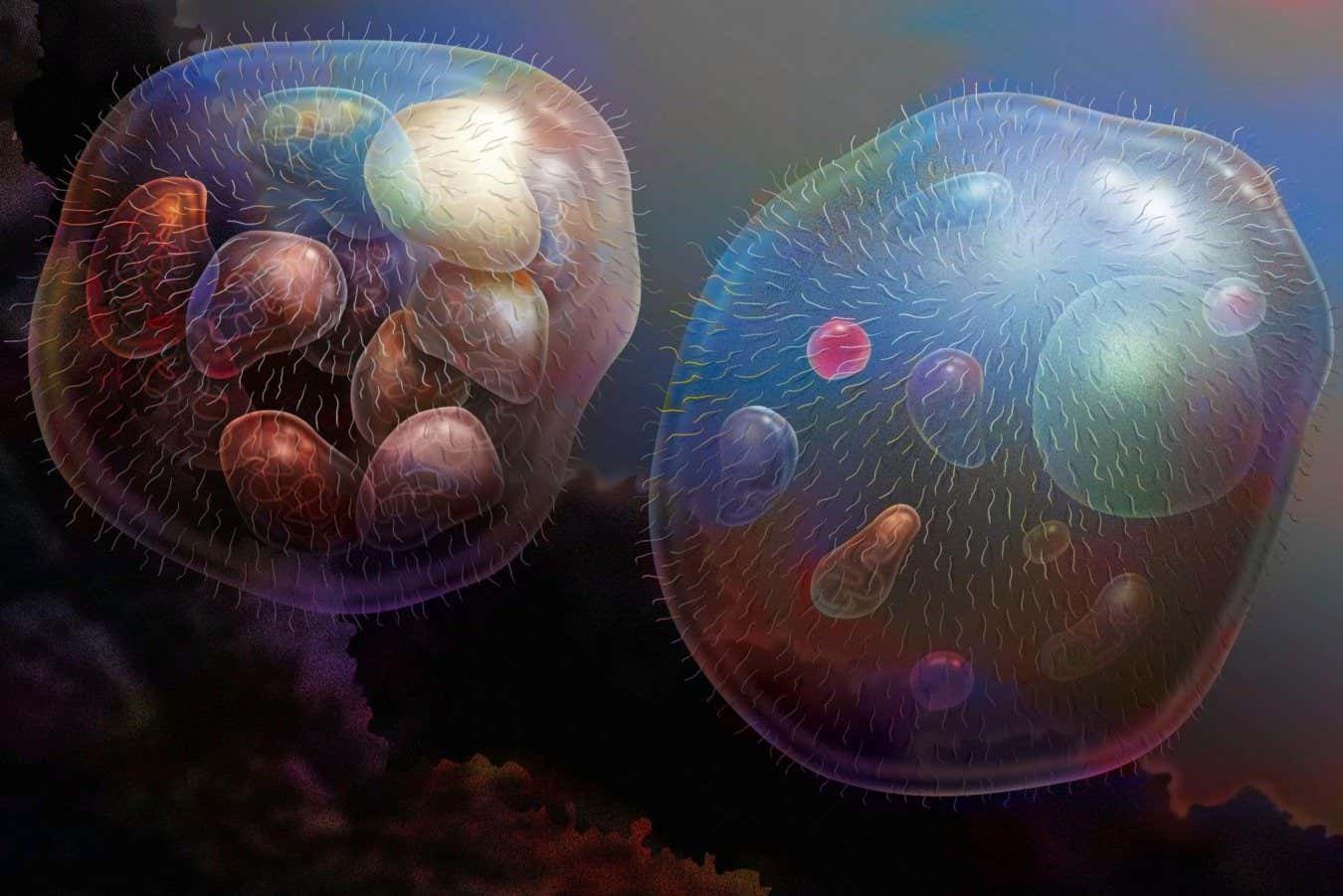
Capitalism has warped our understanding of ecology and life’s origins
ShareXFacebook

The ideas of survival of the fittest and winning at all costs are closely entwinned with Darwinism, but they shouldn’t be. A rethink from a more communal perspective is in order

N

Source

New Scientist

Read full article at New Scientist

Opens original article in a new tab

Advertisement

Related Science Stories

Longest-period young transiting exoplanets discovered
Phys.org

Longest-period young transiting exoplanets discovered

It's 2234, you're on your annual class field trip touring exoplanets, and your teacher informs everyone they can pick one more exoplanetary system to explore before heading back to Earth. You and your classmates are exhausted from the day's activities and you're hungry. However, you get really excited because you already know what everyone will want. You and your classmates all shout in unison, "The young and far away puffy ones!"

Read more →
New study has shone a new light on searching for habitable worlds
Phys.org

New study has shone a new light on searching for habitable worlds

When astronomers discovered the first planet outside our solar system, it was orbiting a pulsar, one of the most extreme, radiation-blasted environments imaginable. Not exactly the kind of place you'd expect to find a planet, let alone a representative one. The first confirmed exoplanet was an oddity, a product of the fact that pulsar timing is extraordinarily sensitive, not a reflection of what planets are typically like.

Read more →
Atmospheric wave theory falls short in explaining rising extreme weather, study suggests
Phys.org

Atmospheric wave theory falls short in explaining rising extreme weather, study suggests

Across much of the northern hemisphere, extreme weather events like heat waves and heavy precipitation have increased in frequency and severity over the last several decades. A new study from the Harvard John A. Paulson School of Engineering and Applied Sciences (SEAS) shows that one proposed partial explanation, so-called "quasiresonant amplification of quasistationary Rossby waves," may not be capable of explaining any of this increase in severe weather events.

Read more →
Pretty in Pink
NASA

Pretty in Pink

This image of Westerlund 2 released on March 19, 2026, features Chandra X-ray Observatory data (pink) and infrared data from NASA’S James Webb Space Telescope (red, orange, green, cyan, and blue). Scores of gleaming stars ringed in neon pink stretch across the frame, highlighting a cluster where stars are between one and three million years […]

Read more →
Advertisement