
AI Bias Analysis

4 models · Takes ~15 seconds

New Scientist

Suzanne Simard on the wood wide web, connectedness – and Avatar
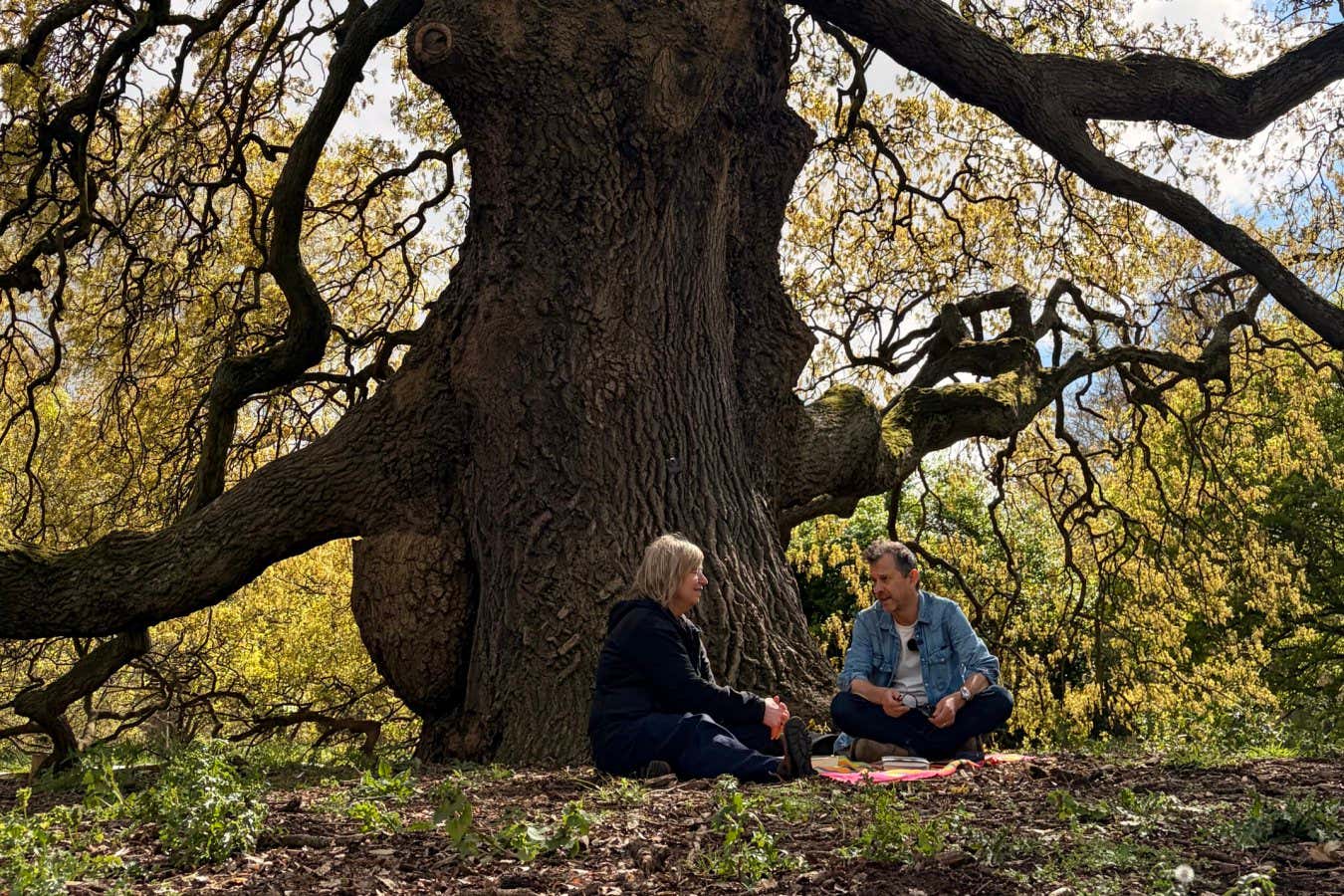
Suzanne Simard on the wood wide web, connectedness – and Avatar
ShareXFacebook

Rowan Hooper met ecologist Suzanne Simard under an oak tree in Kew Gardens, London, to talk about her new book, criticism of her work, and getting a call from James Cameron's people

N

Source

New Scientist

Read full article at New Scientist

Opens original article in a new tab

Advertisement

Related Science Stories

ScienceDaily Composite
Science Daily

Scientists discover hidden math secret inside Chinese money plant leaves

Scientists have uncovered a hidden mathematical secret inside the leaves of the Chinese money plant: a naturally occurring geometric pattern known as a Voronoi diagram, something typically associated with city planning, computer science, and network design. By mapping tiny pores and looping veins in the plant’s leaves, researchers discovered that the plant organizes itself using the same kind of elegant spatial logic humans use to solve complex distance problems — without ever “measuring” anythi

Read more →
ScienceDaily Composite
Science Daily

Scientists discover the strange way CO2 cools part of Earth’s atmosphere

Scientists have finally cracked the mystery behind one of climate change’s strangest fingerprints: while Earth’s surface heats up, the upper atmosphere is rapidly cooling. Researchers at Columbia University discovered that carbon dioxide acts very differently high above the planet, where it actually helps radiate heat into space instead of trapping it. The team found that certain infrared wavelengths fall into a “Goldilocks zone” that becomes increasingly effective as CO2 levels rise, accelerati

Read more →
ScienceDaily Composite
Science Daily

Deadly “red sky” solar storm from 800 years ago discovered in ancient trees

Researchers in Japan traced a hidden medieval solar storm using ancient tree rings and centuries-old sky observations. The team linked reports of eerie red auroras with spikes of carbon-14 trapped in buried wood, revealing a powerful solar radiation event around 1200 CE. The findings suggest the Sun was far more active at the time, with unusually short solar cycles.

Read more →
Advertisement