
The Iran War's Hidden Bill: What the Numbers Say That the News Won't
Brent at $106. Gold at $4,706. The dollar sliding. While Washington debates ceasefires, the global economy is already pricing in the cost.
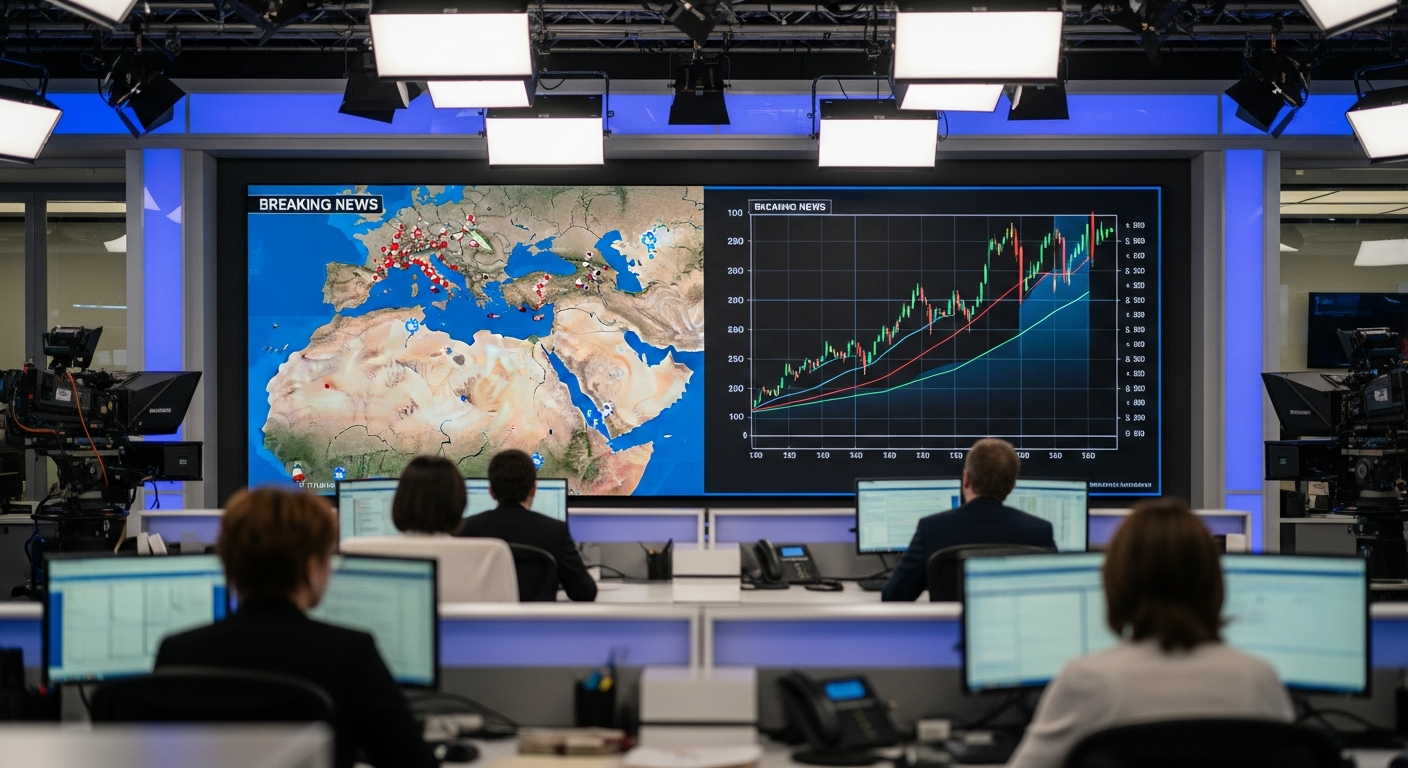
Forget the press conferences. The markets don't lie.
As U.S. and Iranian forces play out a fragile standoff in the Strait of Hormuz — through which roughly 20% of the world's seaborne oil passes — the economic signals are blinking in ways most political coverage is ignoring.
The Numbers, as of Market Open April 24
Brent crude is at $106.07 a barrel, up nearly 1% on the day. WTI sits at $95.56. Gold — the oldest fear gauge in finance — is at $4,706 an ounce. The 10-year Treasury yield holds at 4.32%, with the Fed widely expected to hold rates rather than cut. The dollar is weakening against major currencies: the euro is at $1.17, a level not seen in years.
That combination — rising oil, rising gold, a weakening dollar, and a Fed with no room to ease — tells a specific story. It's not panic. It's something more uncomfortable: a slow repricing of global risk.
The Hormuz Math
About 21 million barrels of oil transit the Strait of Hormuz every day. That's roughly 21% of global petroleum liquids. Even a partial disruption — slowed shipping, insurance surcharges, rerouting around the Cape of Good Hope — adds cost at every step. Analysts put sustained $100+ Brent as a baseline if the strait sees even intermittent disruption.
The U.S. is, ironically, better insulated than it once was. Shale production means American oil imports are a fraction of what they were in 2008. But Europe and Asia aren't so lucky. Japan gets roughly 90% of its oil through Hormuz. South Korea and India aren't far behind. A prolonged conflict doesn't just raise gas prices — it restructures trade relationships, weakens allied economies, and feeds back into U.S. export demand.
The Fed's Impossible Position
Higher oil means higher inflation. Higher inflation means the Fed can't cut — and may face pressure to hike. JPMorgan's chief economist Bruce Kasman said in their 2026 outlook that "central banks do not get the opportunity to validate market expectations for interest rate declines." That was before Iran started seizing tankers.
The housing market, still digesting mortgage rates above 7%, doesn't need another reason for borrowing costs to stay elevated. Neither does the consumer, who's already watched grocery prices climb for three straight years.
What the Media Is Missing
Left-leaning outlets have focused on diplomacy, ceasefire negotiations, and humanitarian concerns — right frames, but incomplete without the economic layer. Right-leaning outlets have covered military operations and Iranian aggression without connecting the dots to what it means for American wallets.
Neither side is giving you the bill.
Gold at $4,706 is the bill. It's what institutional investors — the people who move trillions, not millions — think this situation is worth in insurance premiums.
The Question No One Is Asking on TV
If oil stays above $100 and the Fed can't cut, what happens to the 2026 consumer?
The honest answer: slower growth, sticky inflation, and a Federal Reserve trapped between two bad choices. That's not a recession call. But it's not nothing. The markets are saying this conflict has a price tag. Washington hasn't started writing the check yet — but the global economy already has.
Frequently Asked Questions
Is the Iran war causing oil prices to rise?
Yes. Brent crude crossed $106 a barrel on April 24, 2026, partly driven by uncertainty over the Strait of Hormuz, through which approximately 21% of the world's seaborne oil flows. Any sustained disruption to that corridor pushes prices higher.
Will the Fed cut interest rates during the Iran conflict?
Unlikely. Higher oil prices feed inflation, which limits the Fed's ability to cut rates. JPMorgan's chief economist noted in their 2026 outlook that central banks would not have room to ease as expected. Conflict-driven inflation only narrows that window further.
How does the Strait of Hormuz affect the US economy?
The U.S. is more insulated than in past decades due to domestic shale production. But higher global oil prices still raise transportation, manufacturing, and consumer costs. Weakened allied economies in Europe and Asia also reduce demand for U.S. exports.
Why is gold at an all-time high in 2026?
Gold at $4,706 an ounce reflects institutional investors pricing in geopolitical risk. When uncertainty rises and the dollar weakens, capital rotates into gold as a store of value. The current level signals that large-scale investors see the Iran conflict as a sustained, unresolved risk — not a short-term blip.
What does a weaker dollar mean for Americans?
A weaker dollar makes imports more expensive, which contributes to inflation. It also reflects reduced confidence in the U.S. economic outlook. The euro trading at $1.17 suggests capital is rotating away from dollar-denominated assets.